 11
11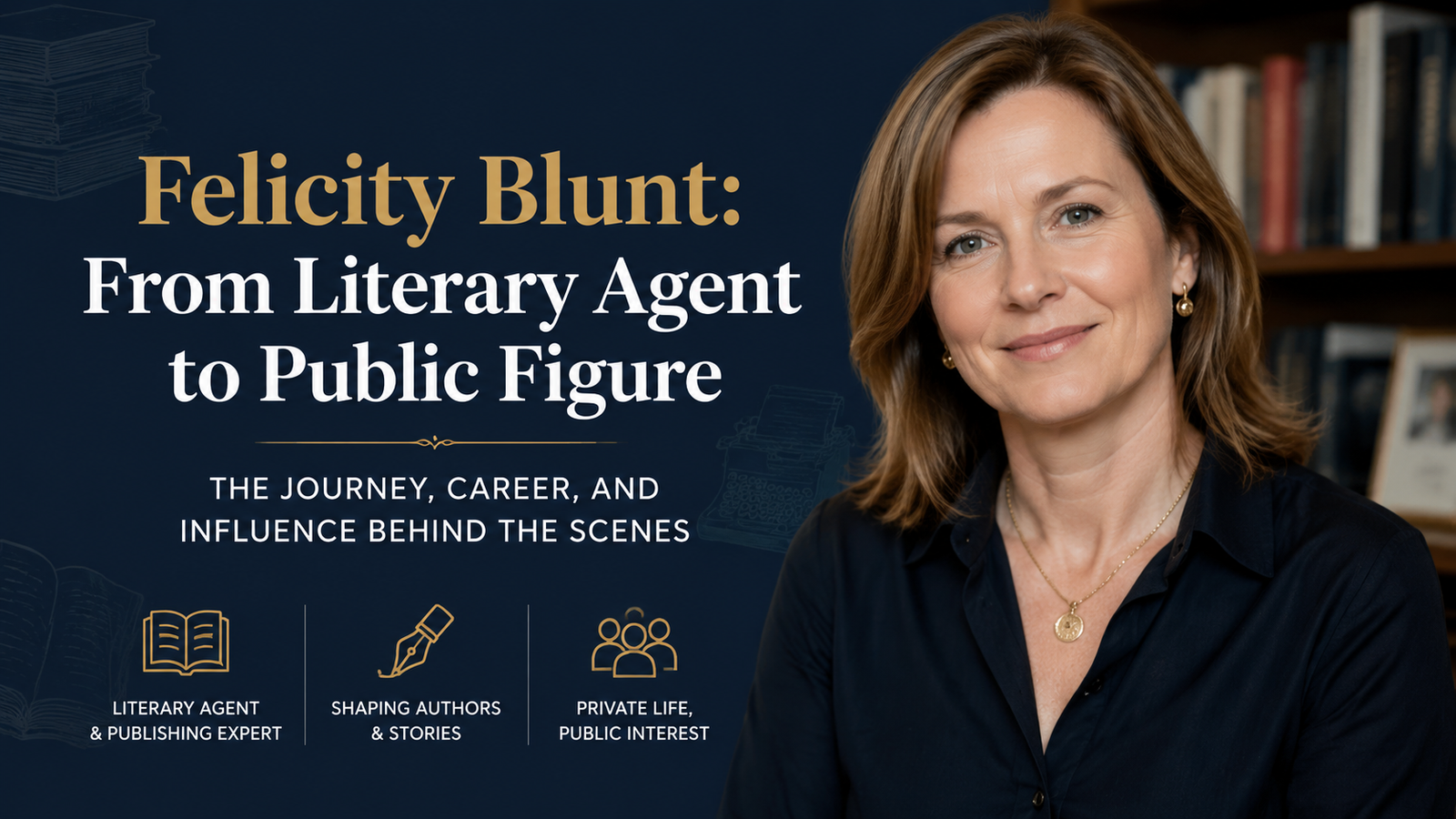
Felicity Blunt grew up in the United Kingdom in a family that valued education, creativity, and academic discipline. While detailed personal records are intentionally private, what is known suggests she developed a strong interest in literature, language, and storytelling from an early stage.
Unlike celebrities who build careers through public exposure, her path was shaped through academic and professional development in publishing. This background naturally led her toward editorial and agenting roles rather than performance-based careers.
Her early exposure to literature played a foundational role in her later success as a literary agent, where analytical reading, negotiation skills, and editorial judgement are essential.
Felicity Blunt built her career in the competitive publishing industry as a literary agent. In this role, she represents authors, negotiates publishing contracts, and works closely with editors and publishers to develop book deals.
A literary agent typically:
Blunt’s role aligns closely with these responsibilities, making her a key intermediary between authors and publishing houses.
Her reputation in publishing circles is built on:
Rather than focusing on volume, agents like her often prioritise quality authorship and sustainable publishing careers.
The publishing industry depends heavily on agents to filter manuscripts and connect talent with publishers. Felicity Blunt operates within this ecosystem as a stabilising and strategic figure.
Literary agents like her are not just negotiators—they are career architects for authors. They influence:
Her work reflects a modern publishing reality where agents are as influential as editors.
The publishing industry is highly competitive, and agents must constantly balance:
Blunt’s sustained presence in this environment reflects consistent professional reliability.
Felicity Blunt became more widely recognised in mainstream media due to her marriage to Stanley Tucci, an internationally known actor.
Before her relationship entered public discourse, she was primarily known within publishing circles. Afterward, her name began appearing in entertainment media coverage, often in relation to her spouse rather than her professional achievements.
This created a dual identity:
This type of visibility shift is common when private professionals are connected to public figures. It does not necessarily change their work but increases external curiosity about their personal and professional life.
Her influence is not measured in fame but in author success and publishing deals.
Without agents like Felicity Blunt, many authors would struggle to:
Her role is structurally important even if it remains behind the scenes.
Public perception of Felicity Blunt is often filtered through entertainment media rather than industry reporting.
A frequent misconception is that her identity is primarily defined by her marriage. In reality, her career exists independently within the publishing industry.
She represents a professional class that:
This balance is increasingly common among professionals connected to public figures.
To understand Felicity Blunt’s role, it is important to understand what literary representation means in practical terms.
A literary agent:
Agents act as gatekeepers in publishing ecosystems. Their judgement often determines:
Blunt operates within this high-responsibility framework.
There are several practical takeaways from her professional path.
Publishing rewards deep expertise over general knowledge.
Long-term author trust is more valuable than short-term deals.
Influence does not require public visibility.
Experience in publishing increases decision accuracy over time.
Public attention is not a requirement for career credibility.
Felicity Blunt represents a professional archetype often overlooked in mainstream discussion: the behind-the-scenes industry expert whose work directly shapes cultural output without requiring personal publicity. As a literary agent, she operates at the intersection of creativity and commerce, guiding authors through one of the most competitive industries in media.
Her increased public recognition through her marriage to Stanley Tucci does not define her career, but it does highlight how modern media often blends private professional identities with public curiosity.
Ultimately, her career demonstrates that influence in publishing is not about visibility—it is about decision-making power, industry trust, and long-term creative partnerships.