 11
11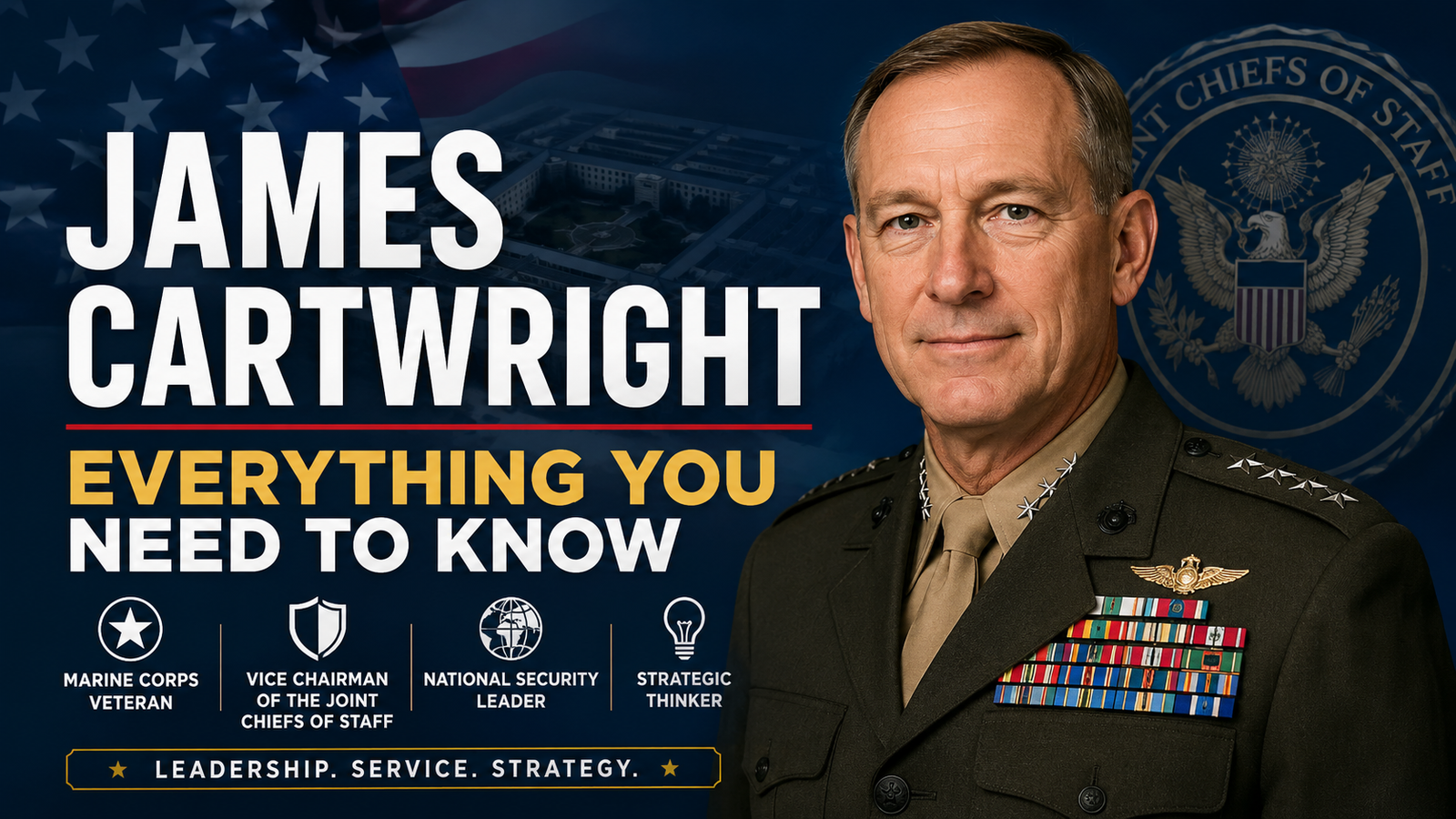
James Edward Cartwright is a retired United States Marine Corps general who served in several of the country’s highest military leadership positions. He is best known for serving as the eighth Vice Chairman of the Joint Chiefs of Staff between 2007 and 2011.
During his distinguished career, Cartwright became a leading voice on military transformation, strategic deterrence, cyber security and missile defence. His advice influenced multiple presidential administrations during periods of significant global security challenges.
James Cartwright was born on 22 September 1949 in Rockford, Illinois.
From an early age, he demonstrated an interest in engineering, leadership and public service. These interests later shaped both his education and military career.
His educational achievements include:
His academic background helped prepare him for increasingly complex operational and strategic responsibilities.
James Cartwright entered the United States Marine Corps in 1971 after completing university.
Initially trained as a naval flight officer, he specialised in aviation and accumulated extensive operational experience over many years.
His early assignments focused on:
These experiences established the foundation for his later senior leadership positions.
Over several decades, Cartwright steadily advanced through the Marine Corps hierarchy.
Some of his key appointments included:
One of the most significant milestones in his career came when he became Commander of the United States Strategic Command (USSTRATCOM).
In this role, he oversaw:
His leadership reflected the changing nature of warfare during the early twenty-first century.
Unlike many traditional military leaders, Cartwright became known for embracing new technologies.
He encouraged investment in:
His willingness to modernise military thinking earned him respect among defence experts.
In 2007, James Cartwright became the Vice Chairman of the Joint Chiefs of Staff.
This position placed him among the highest-ranking military officers in the United States.
His responsibilities included advising:
During this period, global security challenges included:
Cartwright played an active role in strategic discussions involving each of these issues.
One reason James Cartwright gained widespread respect was his collaborative leadership style.
Rather than relying solely on traditional military approaches, Cartwright encouraged problem-solving through technology, intelligence and cooperation between military branches.
Throughout his military career, Cartwright influenced several important defence initiatives.
He helped reshape America’s approach to nuclear deterrence by encouraging flexible and adaptable strategic planning.
Cartwright recognised early that cyber attacks would become a major national security concern.
He supported increased investment in:
Missile defence remained another important focus during his leadership.
He contributed to planning systems capable of protecting against emerging missile threats.
Cartwright frequently advocated for modernising military structures.
His recommendations included:
Many of these ideas continue to influence defence planning today.
| Year | Career Milestone |
|---|---|
| 1971 | Joined the United States Marine Corps |
| 1980s–1990s | Held multiple aviation and command positions |
| 2004 | Became Commander of US Strategic Command |
| 2007 | Appointed Vice Chairman of the Joint Chiefs of Staff |
| 2011 | Retired from active military service |
During his long military career, James Cartwright received numerous honours for distinguished service.
These include several high-level military decorations recognising:
His career remains widely studied in military leadership programmes.
Following retirement, Cartwright continued contributing to discussions on defence and national security.
His work has included:
He has frequently discussed:
Like many senior public officials, James Cartwright’s later career included controversy.
In 2016, he faced legal proceedings relating to allegations concerning unauthorised disclosure of classified information during a federal investigation.
He later pleaded guilty to making false statements to investigators. Before sentencing, he received a presidential pardon in early 2017.
Although this episode became a significant part of his public profile, many analysts continue to distinguish it from his decades of military service and strategic contributions.
James Cartwright’s influence extends well beyond his years in uniform.
His legacy includes:
Many defence experts consider him one of the military leaders who helped guide the United States through an important period of technological transformation.
| Fact | Information |
| Full Name | James Edward Cartwright |
| Born | 22 September 1949 |
| Birthplace | Rockford, Illinois |
| Nationality | American |
| Profession | Retired United States Marine Corps General |
| Highest Position | Vice Chairman of the Joint Chiefs of Staff |
| Military Branch | United States Marine Corps |
| Years of Service | 1971–2011 |
Although retired from military service, James Cartwright’s ideas continue influencing discussions surrounding:
Many of today’s defence policies reflect concepts that gained momentum during his leadership years.
James Cartwright built an exceptional military career through decades of service, strategic leadership and commitment to innovation. Rising from a young Marine Corps officer to Vice Chairman of the Joint Chiefs of Staff, he helped shape American defence policy during a period of significant global change.
His advocacy for cyber security, military modernisation and strategic planning has left a lasting impact on defence thinking. While his post-retirement legal issues attracted considerable public attention, they represent only one chapter in a career that spanned forty years of military service.
For anyone interested in military leadership, defence strategy or modern national security, James Cartwright remains an important figure whose career offers valuable lessons in leadership, innovation and strategic decision-making.