
 11
11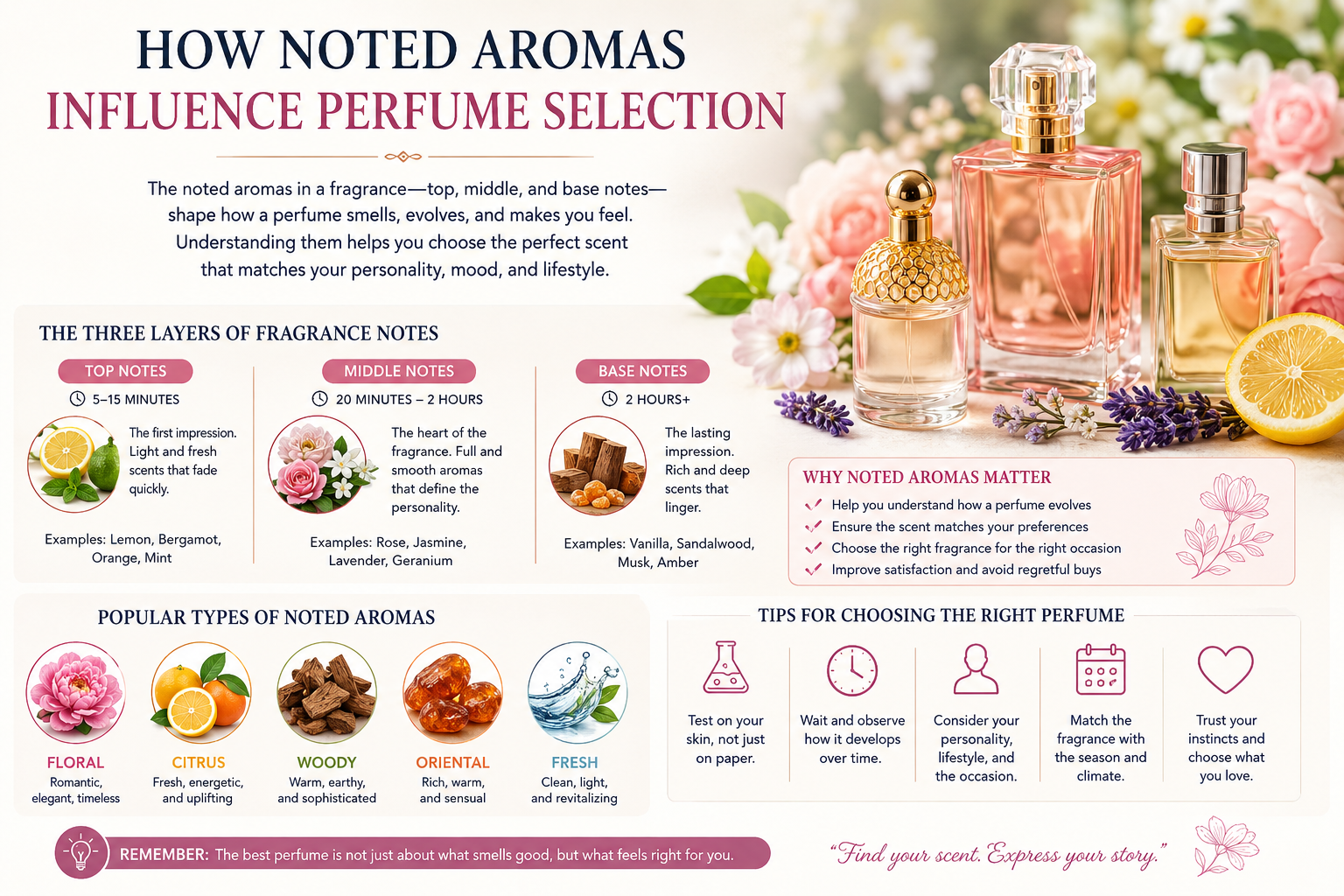
Noted aromas refer to the individual scent components that make up a perfume. These aromas are carefully blended by perfumers to create a balanced and appealing fragrance profile.
Each aroma contributes a specific characteristic to the overall scent. Some notes provide freshness, while others add warmth, sweetness, depth, or sophistication.
Examples of common noted aromas include:
Together, these notes form the unique identity of a perfume.
Fragrance notes are the building blocks of perfume composition. They are typically divided into three categories:
Each category appears at different stages after application and contributes to the fragrance experience.
The interaction between these notes determines how a perfume evolves throughout the day.
Choosing a perfume without understanding its noted aromas can be challenging. A fragrance may smell wonderful initially but develop into something entirely different after several hours.
Knowing the fragrance notes helps consumers:
For example, someone who enjoys warm and comforting scents may prefer vanilla, amber, and sandalwood notes, while another person may favour fresh citrus and aquatic aromas.
Top notes are the first scents detected immediately after applying perfume.
These notes are typically:
Common top noted aromas include:
Top notes create the crucial first impression of a fragrance.
A citrus perfume may initially smell vibrant and energising due to bergamot and lemon notes.
Middle notes, often called heart notes, emerge once the top notes begin to fade.
These aromas define the personality of the fragrance.
Popular middle notes include:
Heart notes typically last several hours.
A floral perfume may reveal delicate jasmine and rose aromas after the initial citrus opening fades.
Base notes form the foundation of a fragrance.
They appear later and provide depth and longevity.
Common base noted aromas include:
These scents can remain noticeable for many hours.
A perfume may finish with warm vanilla and sandalwood notes that create a lasting impression.
Floral fragrances remain among the most popular perfume categories.
Common floral notes include:
These scents often feel elegant, romantic, and timeless.
Citrus noted aromas provide freshness and energy.
Popular citrus notes include:
These fragrances are ideal for daytime wear.
Woody notes create depth and sophistication.
Examples include:
They are frequently used in masculine and unisex fragrances.
Oriental fragrances are known for richness and warmth.
Common notes include:
These perfumes are often chosen for evening occasions.
Fresh fragrances provide a clean, uplifting experience.
Popular notes include:
These scents are particularly popular during warmer months.
Perfume selection is highly personal.
Several factors influence how individuals respond to noted aromas:
Certain scents trigger memories.
For example:
These emotional connections strongly influence purchasing decisions.
Different lifestyles often require different fragrance profiles.
Suitable noted aromas:
Suitable noted aromas:
Suitable noted aromas:
Perfumes react differently on each person’s skin.
The same fragrance can smell:
Testing perfumes before purchasing is therefore essential.
The sense of smell has a direct connection to the brain’s emotional centres.
This explains why noted aromas can influence mood and behaviour.
Examples:
Often associated with:
Examples:
Often associated with:
Examples:
Often associated with:
Understanding these emotional effects helps consumers choose fragrances that align with their goals and occasions.
When selecting a perfume, consider the following process:
Ask yourself:
Understanding fragrance families simplifies shopping.
Main categories include:
Never rely solely on paper testers.
Apply the fragrance and observe how it develops over several hours.
Pay attention to:
The final dry-down often determines long-term satisfaction.
Different noted aromas perform better in different seasons.
| Season | Recommended Aromas |
|---|---|
| Spring | Floral, Green, Fresh |
| Summer | Citrus, Aquatic, Fruity |
| Autumn | Amber, Spice, Woody |
| Winter | Vanilla, Musk, Oriental |
Matching fragrances to seasonal conditions can improve both comfort and performance.
| Fragrance Family | Characteristics | Suitable For |
| Floral | Romantic and elegant | Daily wear |
| Citrus | Fresh and energetic | Summer and daytime |
| Woody | Sophisticated and warm | Professional settings |
| Oriental | Rich and sensual | Evening occasions |
| Fresh | Clean and uplifting | Casual wear |
This comparison helps narrow perfume options based on personal preferences.
Many consumers make avoidable errors when purchasing fragrances.
Always test perfumes on skin before purchasing.
The fragrance will change significantly over time.
Popular perfumes may not suit your preferences.
Heavy fragrances can feel overwhelming in hot weather.
Testing multiple perfumes at once can overwhelm the senses.
Record perfumes you enjoy and their noted aromas.
If you like one perfume, investigate fragrances with similar notes.
Sample collections allow affordable exploration.
Many people benefit from having:
Personal enjoyment should always outweigh trends and marketing claims.
Understanding how noted aromas influence perfume selection can transform the way you choose and enjoy fragrances. From fresh citrus openings to rich woody base notes, every aroma plays a role in shaping the overall fragrance experience.
By learning about fragrance notes, scent families, and personal preferences, you can make more confident purchasing decisions and discover perfumes that genuinely reflect your personality. Whether you prefer floral elegance, woody sophistication, citrus freshness, or warm oriental blends, recognising the importance of noted aromas allows you to find scents that feel uniquely yours.
The next time you shop for a fragrance, take a moment to explore its noted aromas. You may discover that the perfect perfume is not just about how it smells, but how it makes you feel.