
 11
11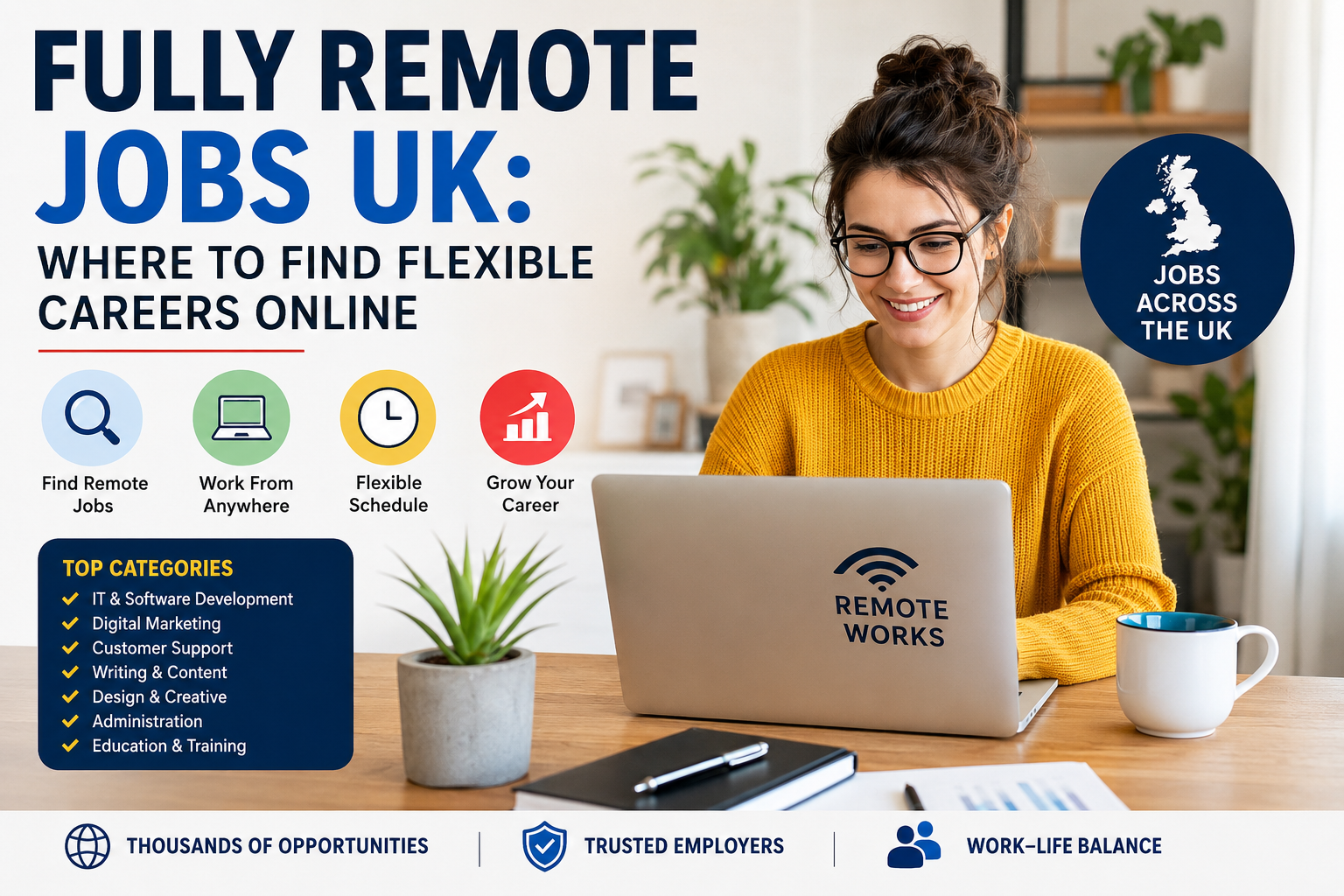
Fully remote jobs are positions that allow employees to work entirely outside a traditional office environment. Unlike hybrid roles, fully remote positions do not require regular office attendance.
Employees usually communicate through:
Many UK companies now operate with distributed teams across different cities and countries.
Remote workers may work:
The flexibility of remote work has changed how businesses hire and manage employees.
Several factors have contributed to the rise of remote employment in the UK.
Cloud computing, collaboration tools, and high-speed internet allow teams to work efficiently from different locations.
Many professionals now prioritise flexibility and work-life balance over traditional office routines.
Remote teams can reduce office costs, travel expenses, and operational overheads.
Employers can hire skilled workers from across the UK instead of focusing only on one city.
Many businesses report that remote workers maintain high productivity levels when supported correctly.
Remote work offers advantages for both employers and employees.
Employees often gain more control over their schedules and daily routines.
Avoiding long commutes can improve wellbeing and reduce stress.
People living outside major cities can access national job opportunities.
Remote workers may spend less on:
Workers can create a workspace that suits their productivity style.
Although remote work has many benefits, it also presents challenges.
Some workers miss face-to-face interaction with colleagues.
Remote teams must communicate clearly to avoid misunderstandings.
Working from home can make it harder to separate work and personal life.
Family responsibilities or household interruptions may affect focus.
Remote workers often need strong time management and discipline.
Employers increasingly support staff with wellbeing initiatives, virtual meetings, and flexible scheduling.
Many sectors now support remote employment.
Technology remains one of the largest remote-friendly industries.
Common roles include:
Marketing teams frequently work remotely.
Popular roles include:
Many UK companies hire remote customer support staff.
Typical responsibilities include:
Online learning platforms continue to grow.
Remote education roles include:
Remote finance and admin positions are increasingly common.
Examples include:
The following table highlights common fully remote jobs uk employers frequently advertise.
| Role | Typical Industry | Entry Level Available | Remote Friendly |
|---|---|---|---|
| Customer Support Advisor | Customer Service | Yes | Yes |
| Content Writer | Marketing | Yes | Yes |
| Software Developer | Technology | Sometimes | Yes |
| Virtual Assistant | Administration | Yes | Yes |
| Graphic Designer | Creative | Yes | Yes |
| SEO Specialist | Marketing | Sometimes | Yes |
| Data Analyst | Technology | Sometimes | Yes |
| Online Tutor | Education | Yes | Yes |
Finding reliable remote opportunities starts with using trusted platforms.
One of the largest job search platforms with extensive remote listings.
Offers remote opportunities across multiple industries.
Popular for professional and entry-level positions.
Focuses entirely on remote positions worldwide.
Popular for tech and digital roles.
Provides screened remote opportunities.
Curates remote jobs from different sectors.
LinkedIn remains one of the strongest tools for finding fully remote jobs uk employers advertise directly.
Useful LinkedIn strategies include:
Remote employers often prioritise certain soft and technical skills.
Clear written and verbal communication is essential.
Remote workers must organise their workload independently.
Familiarity with online tools improves productivity.
Examples include:
Employers value people who can work independently and resolve issues proactively.
Remote environments change quickly, especially in digital industries.
Applying for remote positions requires a tailored approach.
Highlight remote-related experience and transferable skills.
Mention:
Explain why remote work suits your skills and work style.
Many employers use applicant tracking systems.
Include terms such as:
A professional LinkedIn profile can strengthen your applications.
A strong CV increases your chances of securing interviews.
Even freelance or part-time remote work can be valuable.
Use measurable results when possible.
Example:
Clean layouts improve readability for recruiters and ATS software.
Remote interviews differ slightly from traditional interviews.
Check:
Choose a quiet and professional environment.
Understand the company’s culture and remote work policies.
Employers want reliable workers who can manage tasks independently.
Unfortunately, some online job advertisements are not legitimate.
Never share sensitive financial details during early recruitment stages.
Salaries vary depending on industry, experience, and role complexity.
| Job Role | Average UK Salary |
|---|---|
| Customer Service Advisor | £22,000–£30,000 |
| Content Writer | £25,000–£40,000 |
| SEO Specialist | £30,000–£50,000 |
| Software Developer | £45,000–£80,000 |
| Virtual Assistant | £24,000–£35,000 |
| Data Analyst | £35,000–£60,000 |
Freelance and contract roles may offer different payment structures.
Remote teams rely heavily on digital tools.
Learning these platforms can improve employability.
Remote work continues to evolve across the UK job market.
Some companies are gradually moving from hybrid to fully remote models.
UK businesses increasingly recruit international talent.
Remote-first organisations now prioritise mental health support.
Artificial intelligence tools are changing how remote teams operate.
Professionals increasingly combine freelancing, contract work, and remote employment.
Competition for remote roles can be high.
Learning high-demand skills can improve opportunities.
Examples include:
Showcase examples of your work online.
Professional certifications can strengthen applications.
Join:
The demand for fully remote jobs UK employers offer continues to grow across many industries. From technology and marketing to customer service and education, remote careers provide flexibility, convenience, and access to broader opportunities.
However, success in remote working requires preparation. Job seekers should focus on developing communication skills, improving digital literacy, building a professional online presence, and tailoring applications specifically for remote positions.
By using trusted job platforms, researching employers carefully, and continuously improving relevant skills, professionals can build sustainable and rewarding remote careers in the UK job market.
As remote work becomes a permanent part of modern employment, those who adapt early will be well positioned for future opportunities.