
 11
11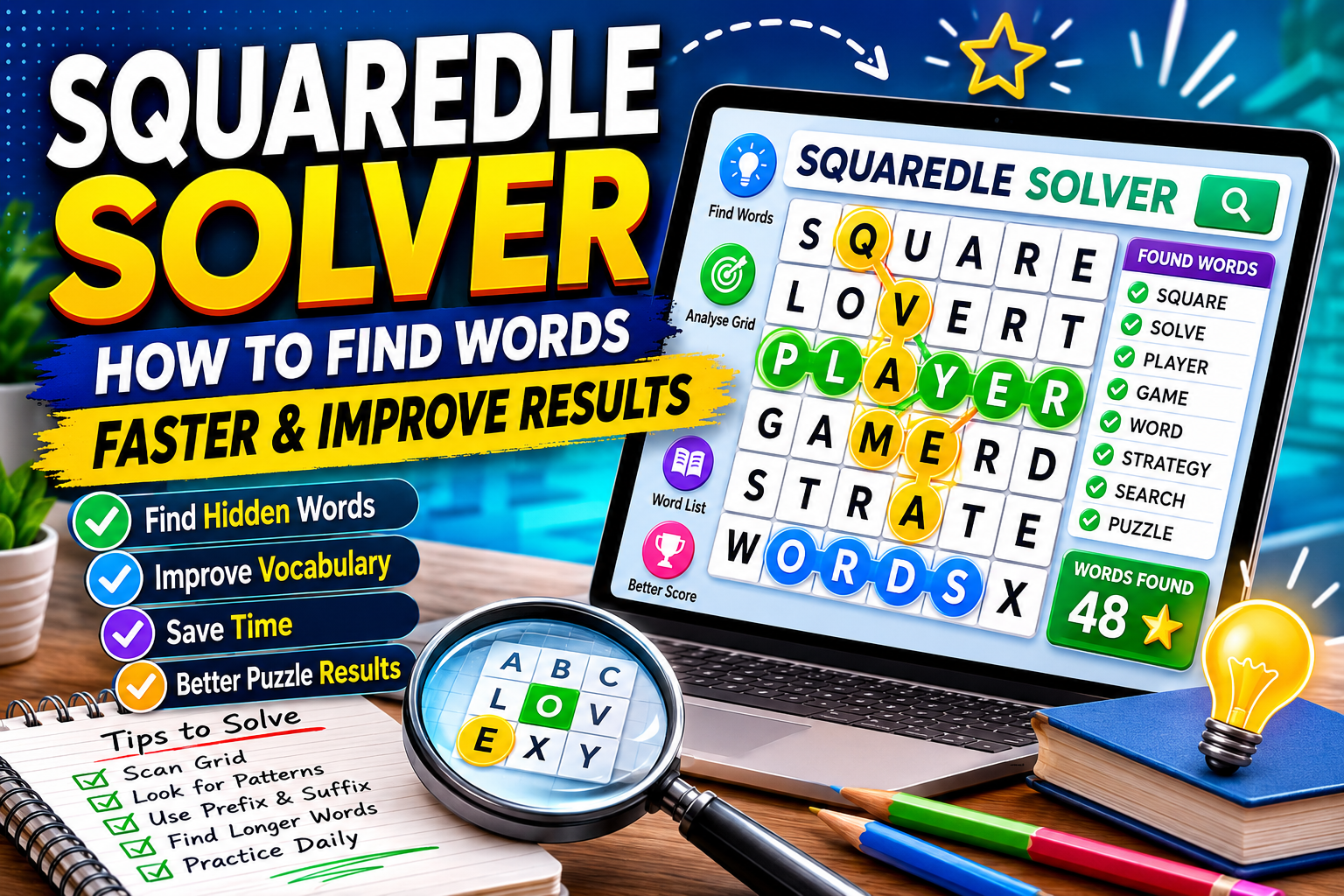
Squaredle is an online word puzzle game that challenges players to find as many words as possible within a grid of letters. Similar to other word search games, players connect adjacent letters to create valid words.
The game rewards:
Unlike traditional crossword puzzles, Squaredle requires players to identify words hidden within a dynamic letter arrangement, making every puzzle unique.
A Squaredle Solver is a tool that analyses a letter grid and generates possible word combinations based on recognised dictionary entries.
The primary purpose of a solver is to:
Many players use a solver after completing a puzzle to see which words they overlooked rather than relying on it from the beginning.
Most Squaredle Solver tools use algorithms and dictionary databases to analyse letter patterns.
The process typically includes:
The player enters the puzzle grid into the solver.
The software examines all possible letter connections.
Potential combinations are compared against an extensive dictionary.
The solver produces a list of valid words that can be formed from the grid.
Words are usually sorted by:
This process occurs within seconds, making it highly efficient.
When used appropriately, a Squaredle Solver offers several advantages.
One of the biggest benefits is exposure to unfamiliar words.
Players often discover:
Over time, this can significantly improve language skills.
Many players focus on obvious word combinations and miss less visible paths.
A solver highlights:
This improves pattern recognition for future puzzles.
Getting stuck can make a puzzle less enjoyable.
A solver provides guidance when:
Rather than simply providing answers, a solver can be used as an educational tool.
Players can:
Although useful, a Squaredle Solver should be used thoughtfully.
Overusing a solver can reduce the satisfaction of solving puzzles independently.
Frequent use may prevent players from developing:
Finding difficult words through personal effort often feels more rewarding than discovering them through automation.
The best approach is to attempt the puzzle first and use a solver only when necessary.
Improving your speed doesn’t always require a solver. Several techniques can help you discover words more efficiently.
Look for prefixes such as:
These often form the beginning of longer words.
Suffixes can reveal hidden opportunities.
Examples include:
Longer words frequently contain smaller words within them.
For example:
“Learning” may contain:
Finding larger words can uncover multiple additional solutions.
Common combinations often appear together.
Examples include:
Recognising these patterns speeds up word discovery.
Avoid randomly scanning the board.
Instead:
This reduces the chance of missing words.
Many players overlook plural forms.
Examples:
Plural variations can increase your score significantly.
Don’t focus only on long words.
Many puzzles contain:
A balanced approach yields better results.
After completing a puzzle:
This helps improve future performance.
| Feature | Squaredle Solver | Manual Solving |
|---|---|---|
| Speed | Very Fast | Slower |
| Learning Potential | Moderate to High | High |
| Challenge Level | Lower | Higher |
| Vocabulary Growth | Good | Excellent |
| Satisfaction | Moderate | High |
| Pattern Recognition | Assisted | Self-Developed |
The ideal approach combines both methods.
Use manual solving first, then review with a solver afterwards.
Many players unknowingly limit their results.
Short words often contribute significantly to total scores.
Hidden words frequently follow unexpected routes.
Repeated letters can create multiple word combinations.
Careful observation often reveals words that quick scanning misses.
Many Squaredle puzzles include words rarely used in everyday conversation.
Yes, when used correctly.
A Squaredle Solver exposes players to words they may never encounter otherwise.
Examples of learning opportunities include:
Players learn:
Repeated exposure strengthens memory retention.
Word puzzles naturally reinforce correct spelling patterns.
Many users report learning dozens of new words over time simply by reviewing solver results.
Not all tools offer the same experience.
Consider the following factors:
Choose a solver with an extensive dictionary database.
The interface should be simple and intuitive.
Results should appear quickly without delays.
Many players prefer solving puzzles on smartphones or tablets.
Useful extras may include:
To maximise learning while maintaining enjoyment:
Spend time exploring the puzzle independently.
Partial assistance preserves the challenge.
Review every missed word and understand its meaning.
Avoid relying on the solver for every puzzle.
Monitor improvements over time.
This approach creates a healthy balance between assistance and skill development.
The success of Squaredle comes from its ability to combine:
Players enjoy the sense of accomplishment that comes from uncovering hidden words and improving their language skills.
A Squaredle Solver can complement this experience by helping players learn from mistakes and discover new possibilities within each puzzle.
A Squaredle Solver can be a valuable resource for players looking to find words faster, improve puzzle performance, and expand their vocabulary. While solving puzzles independently remains the most rewarding approach, a well-used solver provides learning opportunities that can strengthen word recognition, spelling, and pattern detection skills.
The key is balance. Use a solver as an educational aid rather than a replacement for problem-solving. Attempt each puzzle on your own first, then review missed words to identify areas for improvement. Over time, you’ll develop stronger strategies, discover new vocabulary, and achieve better results naturally.
Whether you’re a beginner or an experienced puzzle enthusiast, combining practice with smart learning techniques can make every Squaredle challenge more enjoyable and rewarding.